 AI Chatbots
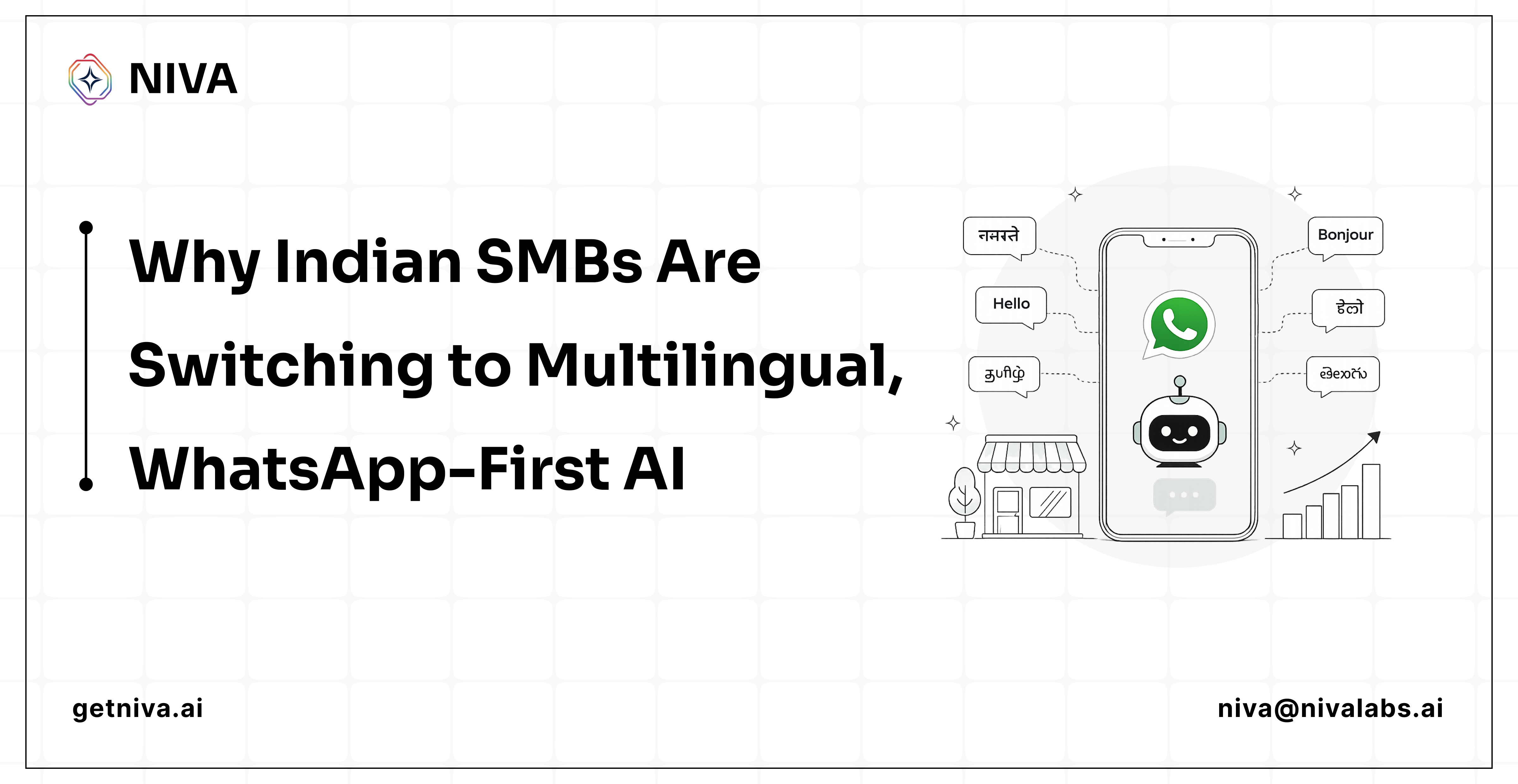
Why Indian SMBs Are Switching to Multilingual, WhatsApp-First AI
Aug 19, 20263min
We design automation for document flows, approvals, and operational handoffs using models, rules, and human review.
Built to raise throughput without removing accountability.
Clear boundaries save time. Here is when this service is a strong match.
Practical automation patterns for operational teams.
Classify, extract, validate, and route documents into downstream systems with exception queues.
Move work between people and systems with rules, models, and clear ownership at each step.
Detect delays, missing data, and SLA risk, then notify the right owner with context.
Keep judgment where it belongs without forcing every item through a manual path.
Update records through APIs with logs operators can inspect when something looks wrong.
Track throughput, error rates, and rework so automation improves after launch.
A simple loop from capture to action to observation.
Ingest emails, uploads, forms, or system events that start the workflow.
Classify and extract with models and rules tuned to your document and data patterns.
Apply policy, route work, update systems, or request human review.
Monitor outcomes, surface failures, and feed improvements back into the flow.
Processes where automation usually pays for itself quickly.
Extract fields, validate against rules, and push clean records into finance or claims systems.
Less keying, faster cycle time, clearer exceptions.
Collect required documents, check completeness, and escalate missing items automatically.
Fewer stalled packets and fewer status chases.
Classify inbound requests and assign them with context to the right queue.
Lower misroutes and faster first response.
Assemble and validate shipping paperwork before handoff to partners or customs.
Fewer rejected packs and less last-minute firefighting.
Document steps, owners, systems, and failure modes.
Define rules, model roles, and human review points.
Run against live samples and measure rework.
Harden monitoring and hand off runbooks to operators.
We define metrics before the pilot starts.
Higher throughput on the target process
Lower manual touches per item
Exception queues operators trust
Auditability of automated actions
Straight answers about scope, delivery, and what working with us looks like.
Usually both. Rules and integrations handle deterministic steps. Models help with documents, classification, and messy inputs. We pick the simplest approach that works.
We design exception queues and confidence thresholds so uncertain items go to people. Automation should reduce load, not hide errors.
Yes. Most clients start with a single high-volume flow, prove value, then expand.
Share your operations context. We will map a practical path from idea to a production system.
Many programs combine more than one service.
Practical notes on agents, LLM applications, and automation from production work.
Explore
Where we apply this work for specific teams and industries.