NIVA Pricing, Features and Honest Review 2026: Is It Actually Worth Your Money?
July 2, 20263min
NIVA AI Chatbot review: Get an honest, no-fluff look at NIVA's pricing, features, and real value. Is this conversational AI platform worth your investment?
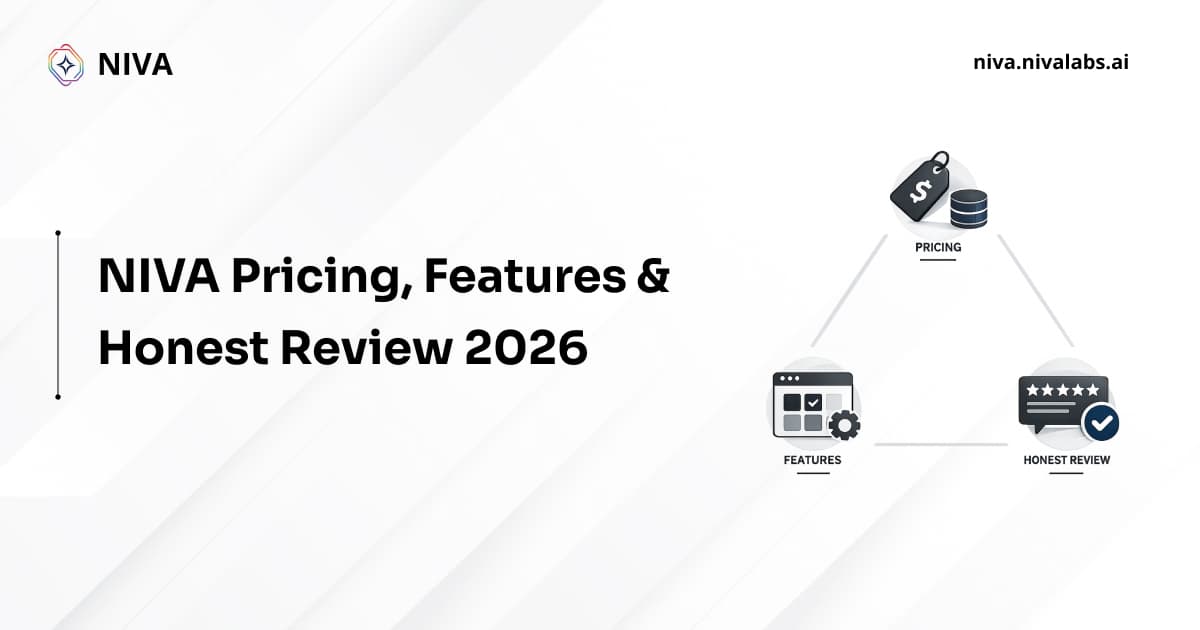
A real, no-fluff look at what NIVA costs, what you actually get, and whether it deserves a spot on your shortlist this year.
Let's be upfront about something. Most "reviews" you find online for enterprise software are barely reviews at all. They read like a press release wearing a trench coat. Five stars, glowing quotes, zero mention of anything that might make you pause before signing a contract.
This is not going to be that.
We spent time actually looking into NIVA, the conversational AI platform that has been getting a lot of attention from mid-size and enterprise teams lately, and we are going to walk you through it the way we would explain it to a friend who is about to spend real budget on it. Pricing, features, the good parts, the parts that need a second look, and who should actually consider it.
If you searched for "NIVA pricing" or "is NIVA worth it," you are in the right place.
First, What Is NIVA Actually For?
NIVA is built around a simple idea that a lot of chatbot platforms have somehow missed. A conversation with a customer should not just end in an answer. It should be able to move something forward.
Instead of being a glorified FAQ bot that repeats what is already on your help page, NIVA is designed to remember who it is talking to, understand what stage of the relationship that person is in, and actually push a process along when it makes sense. Collecting information, starting a workflow, handing off to a human with full context instead of a blank slate. That is the pitch, and to its credit, it mostly lives up to it.
It is aimed at businesses that deal with more than simple one-off questions. Think healthcare intake, financial services, marinas and property management, retail support, and any business where a customer might come back three times over two weeks before actually converting or resolving their issue.
The Pricing Question Everyone Actually Wants Answered
Here is the honest part. NIVA does not publish a flat, one-size-fits-all price sheet, and that is by design rather than an oversight. Like most serious enterprise conversational AI platforms, the cost depends on your conversation volume, how many workflows you plan to run, how many personas or departments you need the assistant to represent, and which integrations you are connecting.
That can feel frustrating if you are used to SaaS tools where you just pick a plan and swipe a card. But here is the thing worth understanding before you get annoyed by it. Chatbot platforms that quote a flat rate to everyone tend to fall into one of two categories. Either the product is simple enough that pricing it flatly makes sense, or the flat number is a teaser and the real cost shows up later once you are locked in and hitting usage caps.
NIVA takes the quote-based route instead, which in practice tends to work out better for buyers who actually push volume, because you are not stuck paying enterprise prices for capabilities you never use, and you are not blindsided by a surprise bill the month your traffic spikes.
What we can tell you from looking at how the plans are structured is that NIVA generally scales across three broad tiers. A starting tier for teams testing the waters with a single use case. A growth tier for businesses running multiple workflows and needing deeper integrations. And a full enterprise tier for organizations that need custom personas, dedicated support, and heavier compliance requirements.
The honest advice here is simple. Do not accept a generic quote. Bring your actual expected conversation volume and your actual list of systems you need connected, and ask for a walkthrough of what happens when your usage doubles. Any vendor worth working with should answer that question without flinching.
The Features That Actually Stand Out
A lot of platforms list fifty features and forty of them do not matter to you. Here are the ones from NIVA that actually change how your team works day to day.
It remembers people. Most chatbots forget a customer the second the browser tab closes. NIVA keeps context across sessions, so when someone comes back two days later to finish what they started, they are not forced to repeat themselves. This one feature alone tends to reduce the "I already told you this" frustration that kills customer trust faster than almost anything else.
Forms show up inside the conversation, not as a separate page. Nobody enjoys getting redirected to a clunky form halfway through a chat. NIVA slides the form into the conversation itself at the moment it is actually needed, which sounds small until you see how much higher the completion rates end up being.
It can actually do things, not just say things. This is the part that separates NIVA from the sea of chatbots that only answer questions. It can kick off an internal workflow, trigger an approval, create a record, or schedule something, all from inside the same conversation. You are not bolting on a separate automation tool and hoping the two systems talk to each other nicely.
One assistant, many personalities. A returning enterprise client and a brand-new prospect do not need the same conversational tone or the same priorities. NIVA can shift its approach depending on who it is talking to, without you building and maintaining five separate bots.
Handoffs to humans do not start from zero. When a conversation needs a real person, the agent who picks it up gets the full story instead of a half-finished transcript. Customers do not have to explain themselves twice, which is a bigger deal than it sounds.
Where NIVA Falls Short
No honest review skips this part.
The setup is not a five-minute plug-and-play experience. Because NIVA is built to handle actual workflows and multiple personas, getting it fully configured for your business takes real planning time upfront. If you want something you can launch in an afternoon with zero thought, this is not that tool, and it is not trying to be.
Pricing transparency, as mentioned, requires a conversation rather than a quick glance at a webpage. Some buyers will find that annoying, especially smaller teams who just want a number to compare against competitors.
And if your use case is genuinely simple, a small internal helpdesk with a handful of static questions and no need for workflows, NIVA is honestly more platform than you need. You would be paying for depth you will never use.
Who Should Actually Consider NIVA
Based on everything above, NIVA makes the most sense for businesses where:
- Customers interact more than once before a resolution happens
- The chatbot needs to trigger real processes, not just answer questions
- Different customer types need genuinely different conversational treatment
- Support handoffs need to preserve context instead of starting over
- The team managing it day to day is not necessarily a developer
It is probably not the right fit if your entire use case is a single static FAQ page turned into a chat window, or if you are running a short-term pilot with no intention of scaling it further.
The Bottom Line
NIVA is not the cheapest option on the market, and it does not pretend to be. What it offers instead is a platform built for businesses that need their AI assistant to actually carry weight, remembering customers, moving workflows forward, and handing off conversations without losing the thread.
If your business fits that description, the investment tends to pay for itself through fewer repeated conversations, faster resolutions, and processes that no longer need a human to babysit every step. If your needs are simpler, you will likely be happier and cheaper off with something lighter.
Either way, do not take a pricing page at face value, from NIVA or anyone else. Bring your real numbers, ask the uncomfortable questions about scaling costs, and judge the platform on how it handles your actual use case rather than a polished demo script.
That is the only honest way to review software in 2026, and it is the only way you should be buying it.
NIVA offers demos tailored to your specific use case rather than a generic script. If you are evaluating it seriously, ask to see it handle your hardest, most realistic customer scenario before you talk numbers.
Building something similar for your operations? We can help scope the right system.